About
The Susztak Laboratory
The Susztak Laboratory studies why kidneys fail and how to stop it. We start from the human kidney itself: more than 5,000 kidney samples with clinical information, profiled at every molecular layer, and read together with the genetics of millions of people, single-cell and spatial maps, longitudinal patient cohorts and artificial intelligence. Our aim is to turn that knowledge into precise diagnostics and targeted therapies for the 850 million people who live with kidney disease.

Principal investigator
Katalin Susztak, MD, PhD
Katalin Susztak is a physician-scientist whose laboratory has shaped how the field understands the genetics and cell biology of chronic kidney disease. She is the Willard and Rhoda Ware Professor of Diabetes and Metabolic Diseases and Professor of Medicine and Genetics at the Perelman School of Medicine of the University of Pennsylvania, Professor of Pediatrics at the Children's Hospital of Philadelphia, Co-Director of the Penn/CHOP Kidney Innovation Center and Director of the Diabetic Kidney Disease Program of Penn's Institute for Diabetes, Obesity and Metabolism.
She received her MD in 1995 and her PhD in 1997 from Semmelweis University in Budapest, both summa cum laude, and came to the United States for residency in internal medicine and fellowship in nephrology at the Albert Einstein College of Medicine in New York, where she also earned a Master of Science in Clinical Research. She joined the Einstein faculty in 2002, rising to Associate Professor of Medicine and Genetics, and moved to the University of Pennsylvania in 2012. She is board certified in internal medicine and nephrology and has cared for patients with kidney disease throughout her research career.
Her laboratory was the first to map the human kidney epigenome and the first to catalogue systematically how genetic variation changes gene expression in human kidney tissue. By integrating genome-wide association studies in millions of people with these molecular maps, her group has identified causal genes and regulatory variants for kidney disease and built the Kidney Disease Genetic Scorecard. With single-cell and spatial genomics it produced the first comprehensive cell atlas of the human kidney, defined the injured proximal tubule states and the fibrotic microenvironment that drive disease progression, and revealed a B cell-rich subgroup of diabetic kidney disease. Work in animal models established MANBA, DAB2, DACH1 and APOL1 as kidney disease risk genes and defined the roles of proximal tubule metabolism, endolysosomal trafficking, nucleic acid sensing and developmental pathways in disease. She has published more than 290 papers, most with trainees as first authors.
Dr. Susztak leads the TRIDENT consortium, a multi-centre longitudinal kidney biopsy study of diabetic kidney disease, and is Principal Investigator of the NIH Whole Person Physiome Research and Coordination Center. Since 2005 she has trained more than forty graduate students and fellows, many of whom now lead laboratories and clinical divisions of their own. She co-founded Tarna Therapeutics to bring genetically supported kidney targets into the clinic and founded NephroBase, the laboratory's artificial intelligence programme.
She is an elected member of the National Academy of Medicine, the American Society for Clinical Investigation and the Association of American Physicians. Her honours include the Homer W. Smith Award and the Barry M. Brenner Lectureship of the American Society of Nephrology, the Alfred Newton Richards Award of the International Society of Nephrology, the David M. Hume Award of the National Kidney Foundation, the Carl W. Gottschalk Research Scholar Award and the Young Investigator Award of the American Society of Nephrology and the American Heart Association, and the William Osler Patient Oriented Research Award of the University of Pennsylvania. Her work is supported by the National Institutes of Health, the American Diabetes Association, the Juvenile Diabetes Research Foundation, industry partners and private foundations.
What this site is
The Biobank
The SusztakLab Biobank is the public face of the laboratory's data: 30 interactive resources built from human kidney genetics, epigenomics, single-cell and spatial atlases and rodent models, with every raw file deposited in public repositories. All of it is free for non-commercial research under the data use agreement; please cite the source papers.
The laboratory
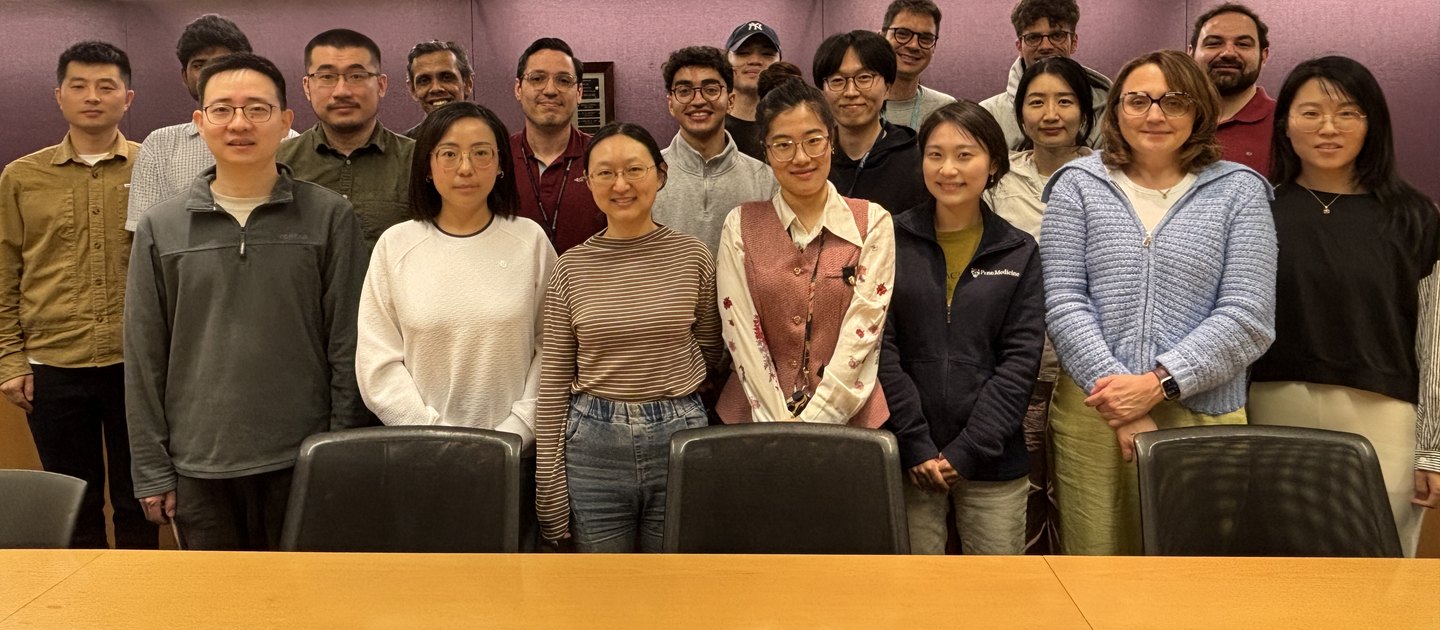
The research pages describe what we study and why, and the people page introduces who does the work. We are part of the Renal, Electrolyte and Hypertension Division of the Department of Medicine, the Department of Genetics and the Penn/CHOP Kidney Innovation Center at the Perelman School of Medicine.
Working with us
We collaborate widely, with academic groups, consortia such as KPMP, CRIC and TRIDENT, and with industry partners who want to test targets in human tissue. Positions are open for postdoctoral fellows, students and specialists; for collaborations and data questions write to ksusztak@pennmedicine.upenn.edu.
Contact
Smilow Center for Translational Research, Room 12-123
3400 Civic Center Boulevard
Philadelphia, PA 19104
Telephone 215-898-2009
ksusztak@pennmedicine.upenn.edu
The laboratory is on the 12th floor of the Smilow Center for Translational Research on the Penn Medicine campus, two blocks south of 30th Street Station.